
USD 216–314 · INDICATIVE
| Parameter | 40/50 | 60/70 | 80/100 |
|---|---|---|---|
| Penetration at 25 °C (dmm) | 40–50 | 60–70 | 80–100 |
| Softening point (R&B), °C | 52–60 | 46–54 | 42–51 |
| Ductility at 25 °C, cm | ≥ 100 | ≥ 100 | ≥ 100 |
| Flash point (Cleveland), °C | ≥ 230 | ≥ 230 | ≥ 230 |
| Solubility in toluene, % | ≥ 99.0 | ≥ 99.0 | ≥ 99.0 |
| Loss on heating (163 °C, 5h), % | ≤ 0.5 | ≤ 0.5 | ≤ 0.8 |
| Specific gravity at 25 °C | 1.01–1.06 | 1.01–1.06 | 1.01–1.06 |
| Standard | EN 12591 / ASTM D946 / GOST 33133 | ||
What is bitumen — production and properties
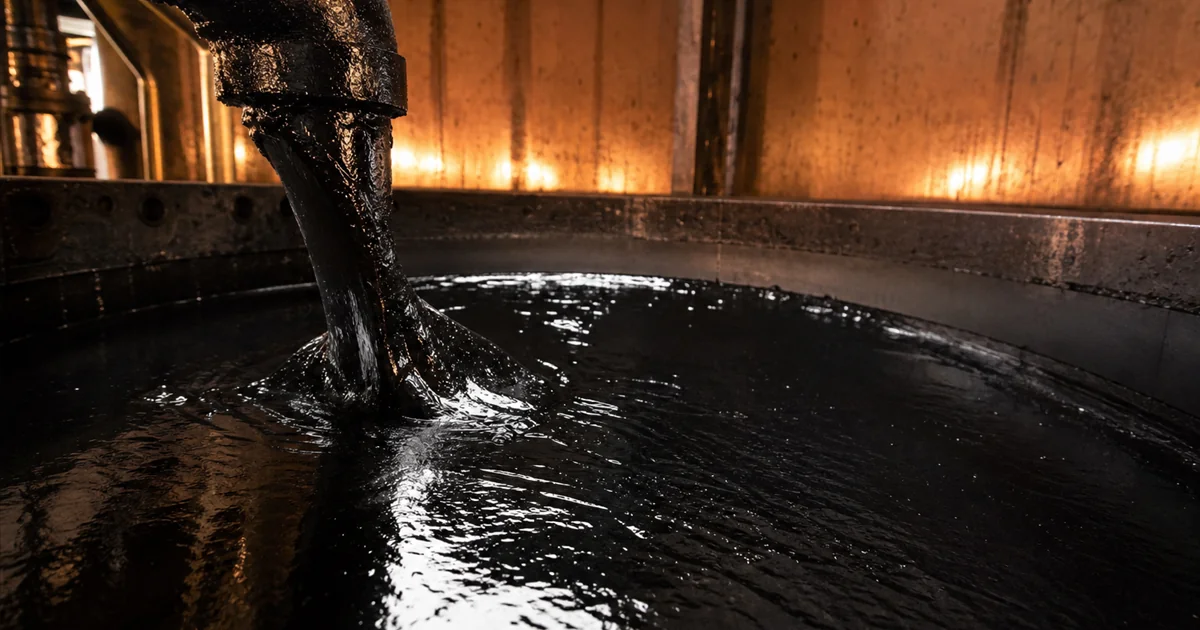
Bitumen (also known as asphalt or asphalt cement in North America) is a black, highly viscous, semi-solid hydrocarbon material. It is produced as the bottom residue of vacuum distillation during crude oil refining. Bitumen is composed primarily of high-molecular-weight hydrocarbons — asphaltenes, resins, aromatics and saturates — giving it its characteristic binding, waterproofing and adhesive properties.
Russia is one of the world's largest bitumen producers and exporters, with a refining industry that generates substantial volumes of vacuum residue suitable for bitumen production. Russian bitumen is well-regarded in international markets for its consistent quality, competitive pricing and availability in both bulk and packaged formats.
The key physical property that defines commercial bitumen grades is penetration — the depth (in tenths of a millimetre) that a standard needle penetrates a bitumen sample under specified conditions (100 g, 25 °C, 5 seconds). Lower penetration numbers indicate harder bitumen (suitable for hot climates), while higher numbers indicate softer bitumen (better for cold climates).
Penetration grades — choosing the right bitumen
We supply three standard penetration grades covering the majority of global construction requirements:
| Grade | Penetration (dmm) | Climate / application |
|---|---|---|
| Bitumen 40/50 | 40–50 | Hot climates (Middle East, Africa, South Asia). Heavy-traffic roads, airport runways. Hard grade — resists deformation at high pavement temperatures. |
| Bitumen 60/70 | 60–70 | Moderate / warm climates. Most widely traded grade globally. Standard paving and road construction. Good balance of stiffness and flexibility. |
| Bitumen 80/100 | 80–100 | Cold / temperate climates (Northern Europe, Central Asia). Lighter traffic roads, residential streets. Softer grade — resists cracking at low temperatures. |
Grade selection depends on local climate conditions (maximum and minimum pavement temperatures), traffic load (heavy/light, speed) and national specifications of the destination country. Our team can assist with grade recommendation based on your project requirements.
Technical specifications — penetration grade bitumen
Each batch is tested at the refinery laboratory and accompanied by a Certificate of Analysis (CoA). Independent inspection at loading can be arranged if required by the buyer.
Applications — roads, roofing, waterproofing, industry
Bitumen is one of the most widely used construction materials in the world, with applications spanning multiple sectors:
- Road construction and paving: Bitumen is the primary binder in asphalt concrete (hot-mix asphalt, warm-mix asphalt). It binds aggregate particles together to form a durable, flexible pavement surface. Over 80% of global bitumen production goes into road building.
- Roofing: Oxidised and modified bitumen is used in roofing membranes, built-up roofing systems and shingles. It provides waterproofing and weather resistance for flat and low-slope roofs.
- Waterproofing and insulation: Bitumen-based coatings and membranes protect foundations, basements, tunnels, bridges and pipelines from water ingress. Bituminous waterproofing is a standard practice in civil engineering and construction.
- Industrial uses: Bitumen is used in the production of paints, varnishes, sealants, adhesives and insulating materials. Modified bitumen (with polymers such as SBS or APP) provides enhanced performance for demanding applications.
- Airport runways and port areas: High-stability asphalt mixes using hard-grade bitumen (40/50) are used for heavy-load areas: airport aprons, runways, container terminals and logistics yards.
Packaging and transport — bulk vs drums
Vessel type: Specialised bitumen carrier with heated tanks
(140–170 °C)
Typical parcel: 3 000–8 000 MT
Discharge: Into heated shore tanks via pipeline
Best for: Large-volume buyers with heated storage
infrastructure
Advantage: Lowest per-tonne cost, fast discharge
Drum size: 150–180 kg per new steel drum
Shipping: Loaded in 20ft containers (~80 drums / ~14 MT per
container)
Storage: No heated storage needed; drums stored at ambient
temperature
Best for: Smaller volumes, remote sites, destinations
without bulk terminals
Advantage: Flexible logistics, easy to handle on site
We also offer bitutainers (insulated ISO tank containers, ~20 MT each) as an intermediate option between bulk and drums — suitable for medium volumes or locations with limited port infrastructure.
Bitumen export markets and delivery terms
Alghaf Marine DMCC exports bitumen to buyers in the Middle East, Africa, South and Central Asia, and the Mediterranean. Infrastructure development in these regions drives strong and growing demand for paving-grade bitumen.
In the Middle East (UAE, Oman, Saudi Arabia, Qatar), bitumen demand is linked to road network expansion, urban development and mega-projects. The hot climate requires hard grades (40/50, 60/70). Bulk CIF delivery to Gulf ports provides reliable supply with known landed cost. FOB Black Sea is preferred by major trading houses.
In Africa (East Africa: Kenya, Tanzania, Mozambique; West Africa: Nigeria, Ghana, Ivory Coast), infrastructure investment is accelerating road construction, creating consistent bitumen demand. Drummed bitumen in containers is a popular option for African buyers due to port and storage constraints. Bulk parcels serve markets with developed terminal infrastructure.
In South Asia (India, Bangladesh, Pakistan, Sri Lanka), massive road-building programmes and urbanisation sustain high bitumen imports. India alone imports millions of tonnes annually. Russian bitumen via Black Sea offers competitive pricing and established shipping routes.
FOB — delivery at Black Sea loading port (Novorossiysk, Tuapse or designated terminal). Buyer arranges vessel (bulk) or container pickup (drummed). CIF — we arrange freight and insurance to your port. Terms, packaging, inspection and documentation per contract.
Typical export documents for bitumen
- Commercial Invoice
- Bill of Lading (B/L)
- Certificate of Analysis (CoA) — penetration, softening point, ductility, flash point
- Certificate of Origin (if required)
- Customs Export Declaration
- Packing List (for drummed shipments)
- Insurance Certificate (CIF shipments)
- Independent inspection report (at loading, if agreed)
Request a bitumen quote
Bitumen pricing depends on grade, packaging, volume, delivery basis and seasonal factors. To receive a workable quote, please specify:
- Grade: 40/50, 60/70 or 80/100
- Packaging: bulk or drums (or bitutainer)
- Volume (metric tons)
- Delivery: FOB (port) or CIF (destination port)
- Preferred loading / delivery window
- Destination country and applicable standard (EN 12591, ASTM, national)
Bitumen frequently asked questions
What is bitumen and what is it used for?
Bitumen is a black, viscous, semi-solid form of petroleum used primarily as a binder in asphalt for road construction, as a waterproofing material in roofing and foundations, and in various industrial applications. It is produced during the vacuum distillation of crude oil and accounts for a significant share of global construction material trade.
What penetration grades of bitumen do you offer?
We supply three standard penetration grades: 40/50 (hard grade for hot climates and heavy traffic), 60/70 (the most commonly traded grade worldwide, suitable for moderate climates) and 80/100 (softer grade for cold climates and lighter traffic). All grades meet EN 12591 or ASTM D946 specifications.
What packaging options are available for bitumen?
Bitumen is available in bulk (heated bitumen tanker vessels or bitutainers) and in new steel drums (typically 150–180 kg per drum, loaded in standard containers). Bulk is preferred for large volumes; drummed bitumen is suitable for smaller parcels or destinations without heated storage.
How is bitumen shipped and stored?
Bulk bitumen is transported in specialised heated tanker vessels (bitumen carriers) that maintain the cargo at 140–170 °C. At destination, it is discharged into heated storage tanks. Drummed bitumen is shipped in standard containers at ambient temperature and can be stored without heating. Drums are melted on-site before use.
How do I request a bitumen quote?
Send your requirements — grade (40/50, 60/70 or 80/100), volume (MT), packaging (bulk or drums), delivery basis (FOB or CIF and port), and timing — to Telegram @AlghafMarine_bot or e-mail. We will respond with a quote including pricing, availability and shipping schedule.
Related bitumen products
Fuel Oil RMG 380 · Gasoil · Naphtha · Petroleum Coke · Logistics & FOB/CIF
Alghaf Marine DMCC — petroleum products export. Indicative prices and full terms are provided upon request.